The Testament of Ba [1] is a Tibetan historical narrative that describes the establishment of Buddhism in Tibet during the reign of the emperor Trisong Detsen (c. 755–797), following its earlier introduction at the Tibetan court under Songtsen Gampo (c. 617–650). The narrative primarily recounts the activities of Śāntarakṣita and Padmasambhava, as well as the founding of Samye Monastery around 779, the first Buddhist monastery in Tibet. Both figures were invited by Emperor Trisong Detsen and, together with the emperor, came to be remembered as the ‘trinity’ of the conversion of Tibet to Buddhism (mkhan slob chos gsum). In later Tibetan tradition, the life of Padmasambhava and his miraculous activities were gradually elaborated, leading to his deification as the patron sage of Buddhism in Tibet. Narratives about his deeds circulated through epic traditions and were later revealed as “treasures” (terma) beginning in the twelfth century.
Although the Testament of Ba largely survives in later manuscript recensions following the collapse of the Tibetan Empire in the 9th century, it provides an important window into how Tibetan historians narrated the religious transformation of the imperial period. The narrative circulated widely in later Tibetan historiography and was incorporated into the works of Tibetan historians such as Nyangral Nyima Özer (c. 1124–1192), Butön Rinchendrup (1290–1364), and Gö Lotsawa Zhönnu Pel (1392–1481), among others.
While the text centers on Trisong Detsen’s reign, it anchors this authority in the earlier era of Songtsen Gampo through the revelation of the Nyanpo Sangwa [Powerful Secret]. The passage below concerns the opening of the Nyanpo Sangwa during the reign of Songtsen Gampo:
“ངའི་དབོན་སྲས་ཆབ་སྲིད་ཆེ་ཡང་འདི་ཁ་ཕྱེ་ལ་ཆབ་སྲིད་ཆུང་ན་ཡང་འདི་ཁ་ཕྱེ་ཞེས་བཀའ་སྩལ།
དབོན་སྲས་ཁྲི་སྲོང་བཙན་གྱི་སྐུ་དྲིན་ལ་ཆབ་སྲིད་ཆེ་བར་འགྱུར།
གཉན་པོ་གསང་བ་ཁ་ཕྱེ་བ་ལས།
གསེར་ལ་ཟ་མ་ཏོག་གི་སྙིང་པོ།
རྒྱ་གར་གྱི་ཡི་གེར་བྲིས་པ་མུ་ཏྲའི་ཕྱག་རྒྱ་ཅིག་ཀྱང་བྱུང་།”
“Whether my descendants’ political authority be great or small, open this,” thus decreed.
Through the gracious merit of the descendant Tri Songtsen, political authority became great.
From the opening of the Nyanpo Sangwa [Powerful Secret], the heart-essence of the golden casket [was revealed].
There also appeared a mudrā seal written in Indian script.”[2]
This passage recounts a particular episode concerning the opening of a golden casket containing Buddhist scriptures during the reign of Songtsen Gampo. According to the narrative, the casket had been sealed away during an earlier, pre-Buddhist period and kept hidden for generations until Songtsen Gampo’s reign.
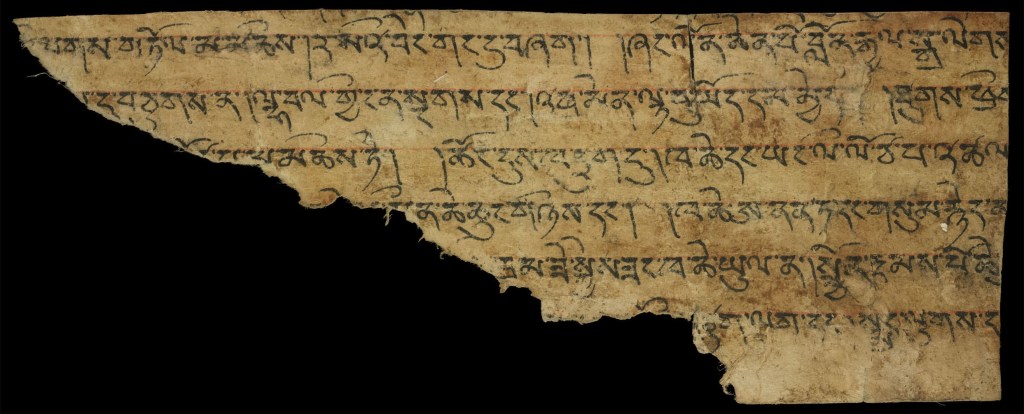
The identification of two fragments among the Dunhuang manuscripts in 2008, though their exact composition dates remain a subject of scholarly debate, confirms that these narratives were already circulating during or shortly after the Tibetan Empire, showing how early Tibetan historians were actively shaping a narrative of Buddhist destiny.
The golden casket is not merely a container of scriptures. It is a narrative argument. By presenting Buddhism as a destiny sealed away in Tibet’s own pre-Buddhist past and revealed under Songtsen Gampo, the Testament of Ba positions the emperor not as the introducer of a foreign religion, but as the fulfiller of one already written into Tibetan soil. The ‘concealed’ texts of the Nyanpo Sangwa anticipate the logic of the terma tradition, in which treasures hidden and revealed at the right moment carry special spiritual authority. Later historiography mythologized the episode further, describing scriptures falling from the sky on the palace roof.[3] Most importantly, the casket contained the Kāraṇḍavyūha Sūtra (‘phags pa za ma tog bkod pa zhes bya ba theg pa chen po’i mdo), a Mahāyāna Buddhist scripture devoted to Avalokiteśvara that famously contains one of the earliest textual attestations of the mantra oṃ maṇi padme hūṃ.
What the Testament of Ba established, later Tibetan historians elaborated and transmitted. Its framing of Songtsen Gampo as the fulfiller of a pre-ordained Buddhist destiny did not merely describe a pivotal moment in Tibetan history, it became the organizing logic of an entire tradition of historical writing.
Reference
Pasang Wangdu, and Hildegard Diemberger. dBa’ bzhed: The Royal Narrative Concerning the Bringing of the Buddha’s Doctrine to Tibet. Vienna: Austrian Academy of Sciences Press, 2000.
sBa gsal snang. sBa bzhed. Mi rigs dpe skrun khang. Buddhist Digital Resource Center (BDRC), purl.bdrc.io/resource/MW20000
van Schaik, Sam, and Kazushi Iwao. “Fragments of the Testament of Ba from Dunhuang.” Journal of the American Oriental Society 128, no. 3 (2008): 477–487.
 Tibet Historica
Leave a comment